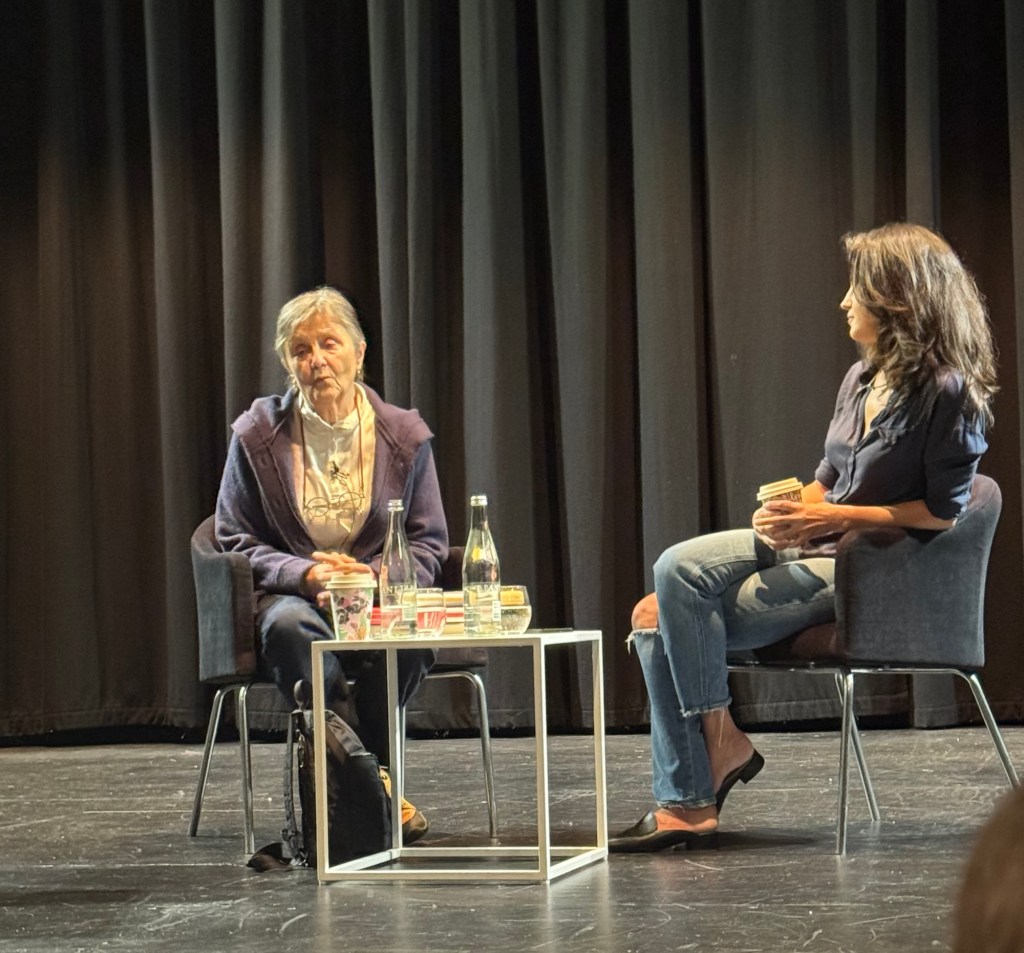
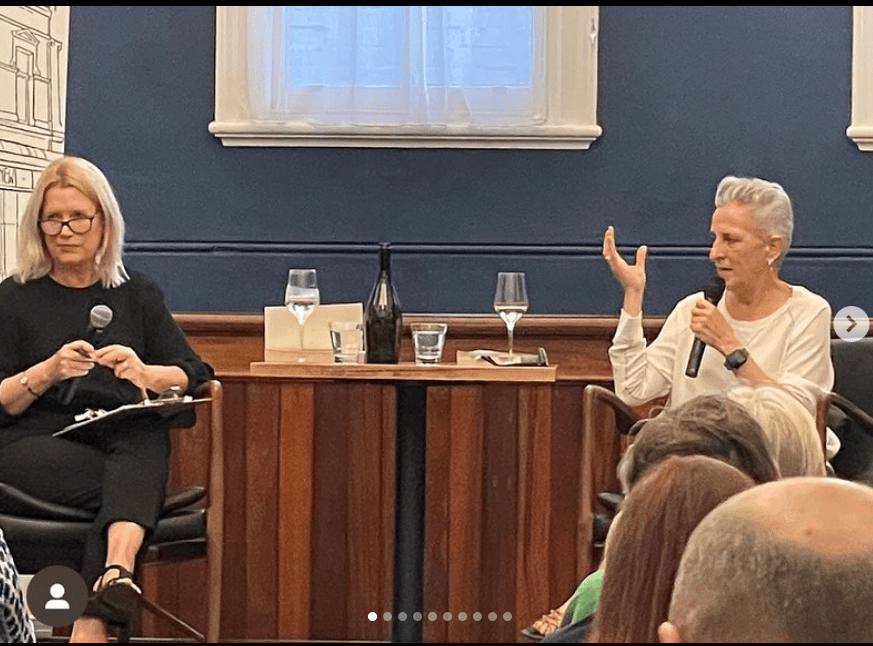
Helen Garner spoke on candour: writing, aging and seeing without being seen, at a literary event in Perth supported by the Forrest Research Foundation in 2025.
I’ve just come back from seeing Helen Garner in conversation with journalist and academic, Dr Merve Emre at UWA in Perth. I took my notebook along and whipped it out when Garner was asked to talk about the best writing advice she had been given early in her career. She said, “I’ll spill my guts,” which sounded promising. I jotted down as much as I could given I have appalling shorthand skills and I was more interested in listening.
1: “I don’t like passages of exposition.”
If your writing is clear, and you trust yourself, trust the reader too, don’t “lecture them with passages and passages of exposition.”
2: “It’s really good practise to write down dreams.”
Helen Garner said she can’t understand why people have such an aversion to hearing about dreams. She is fascinated by them and writes hers down. She talked about the value of writing dreams and also the “inexplicable behaviours,” you might notice in the everyday. She recounted an observation about a professor she interviewed for The First Stone. There was an open tin of biscuits on the coffee table in his office and she took one, and then, because it was delicious, she took another. The professor pointedly replaced the lid and then assured her he hadn’t done so to prevent her from eating anymore biscuits. She didn’t believe him. Notice “dreams, slips of the tongue and inexplicable behaviours, and put them on the page, without explaining them.”
3: “Once you learn free association – bingo. A whole world opens up.”
Helen Garner said both Jung and Freudian psychoanalysis techniques have helped her writing, especially, ‘free association.’ It was developed by Freud to access the subconscious by speaking or writing without self-censorship and without editing anything that might flow naturally into your mind.
The works of essayist and journalist, Janet Malcolm has been hugely influential. Malcolm wrote frequently on psychoanalysis and, as New York Times reviewer, Joseph Edelson noted, also had a “keen eye for the surfaces – clothing, speech and furniture.” Garner herself began to write more freely, less constrained. “Up until then, I felt I’d been writing with the brakes on.”
4: Dangling modifiers “drive her mad.” Just so you know.
5: “I read everything out loud, even the shittiest piece of journalism.”
6: Helen Garner on the best writing advice she was ever given, “You use too many adverbs.”
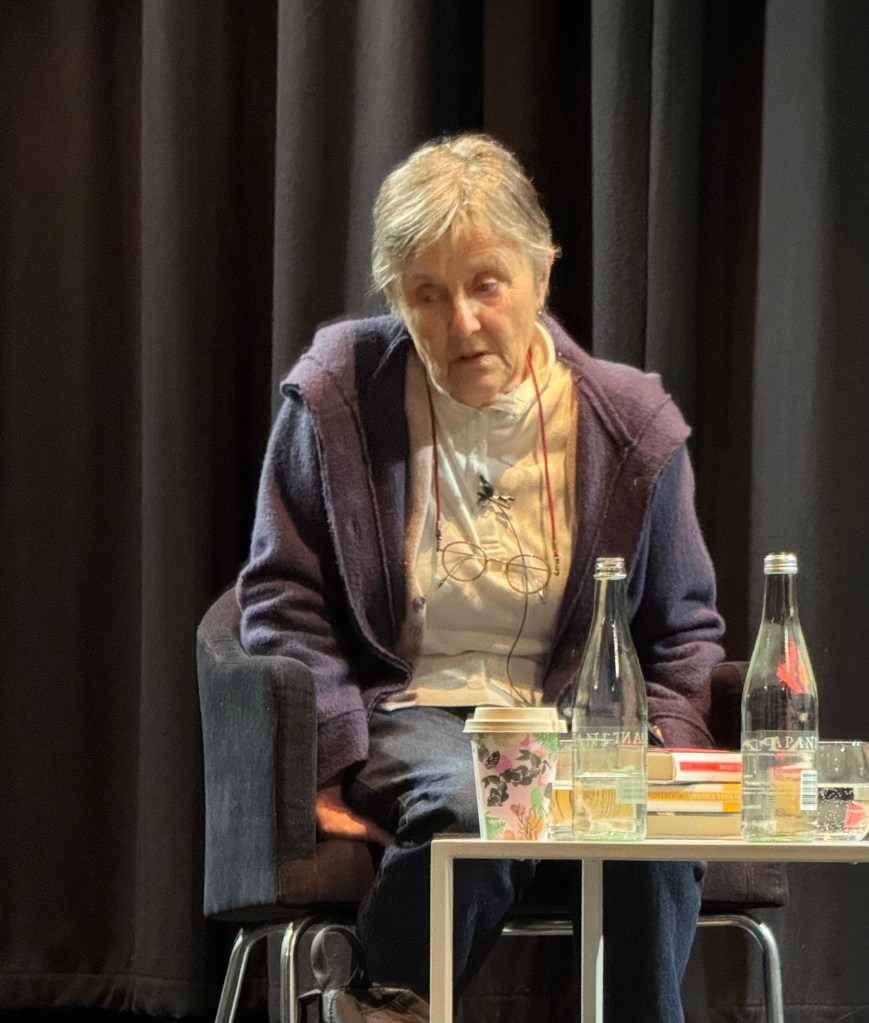
Helen Garner, Perth 2025
Helen Garner’s latest book is The Season, published by Text Publishing.
Some highlights in brief of a year traveling, writing and engaged in glorious conversations. In 2024, I’m looking forward to teaching my first writing workshop at the Society of Women Writers WA, hosting at Writers Weekend for Perth Festival, the Margaret River Readers and Writers Festival, judging the Ethel Webb Bundell Award for Short Stories and hopefully, fingers crossed because I am deeply lazy, writing more short fiction.
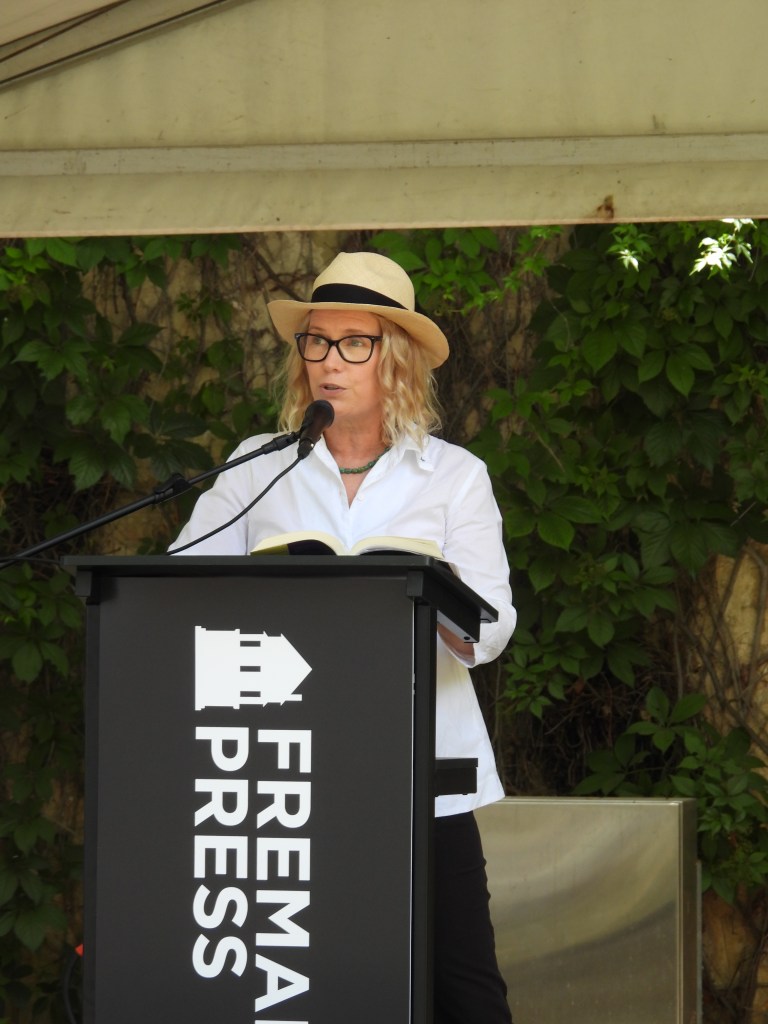
Reading from Into Your Arms, Nick Cave’s Somgs Reimagined at the Fremantle Press Author Showcase for Fremantle Arts Centre’s 50th anniversary.
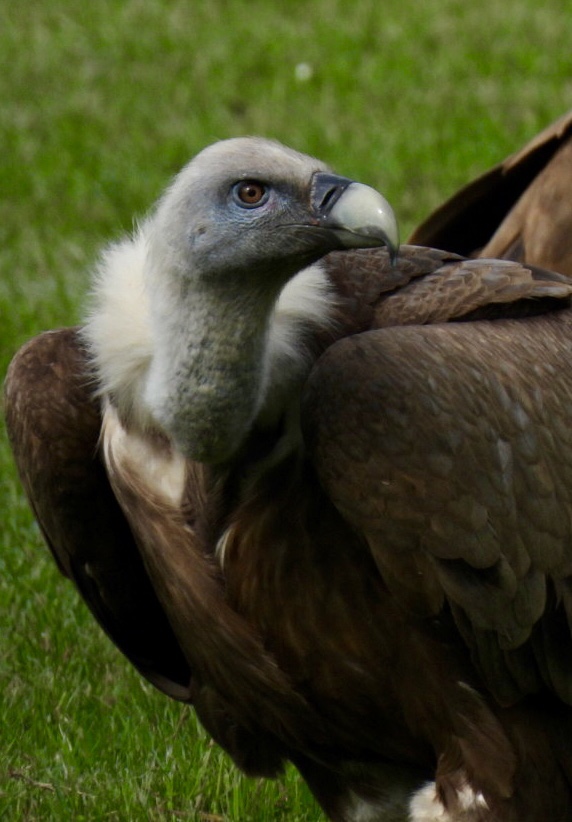
The first half of 2023 was a surreal delight. We travelled to England, Scotland, Norway, Germany and then spent five months living in France. I didn’t do a huge amount of writing, I drank too much rose, painted badly, baked bread, and stalked vultures and flamingos with my camera. I saw the ABBA Voyager concert in London with one of my beautiful best friends, Niomi. It was glorious. I spent every single day for the entire trip with my husband and I still quite like him. I might even do it all again if he asks me to.
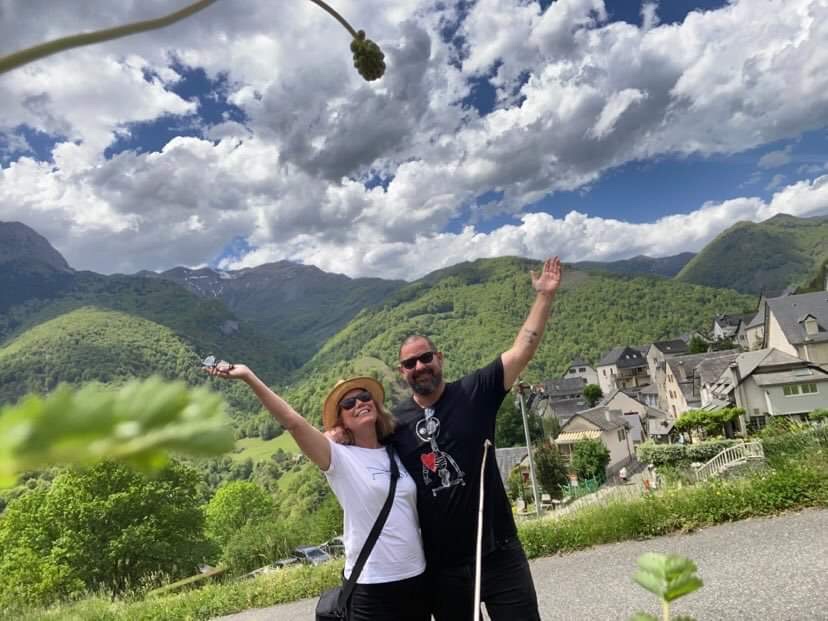
Aydius, Pyrenees France.
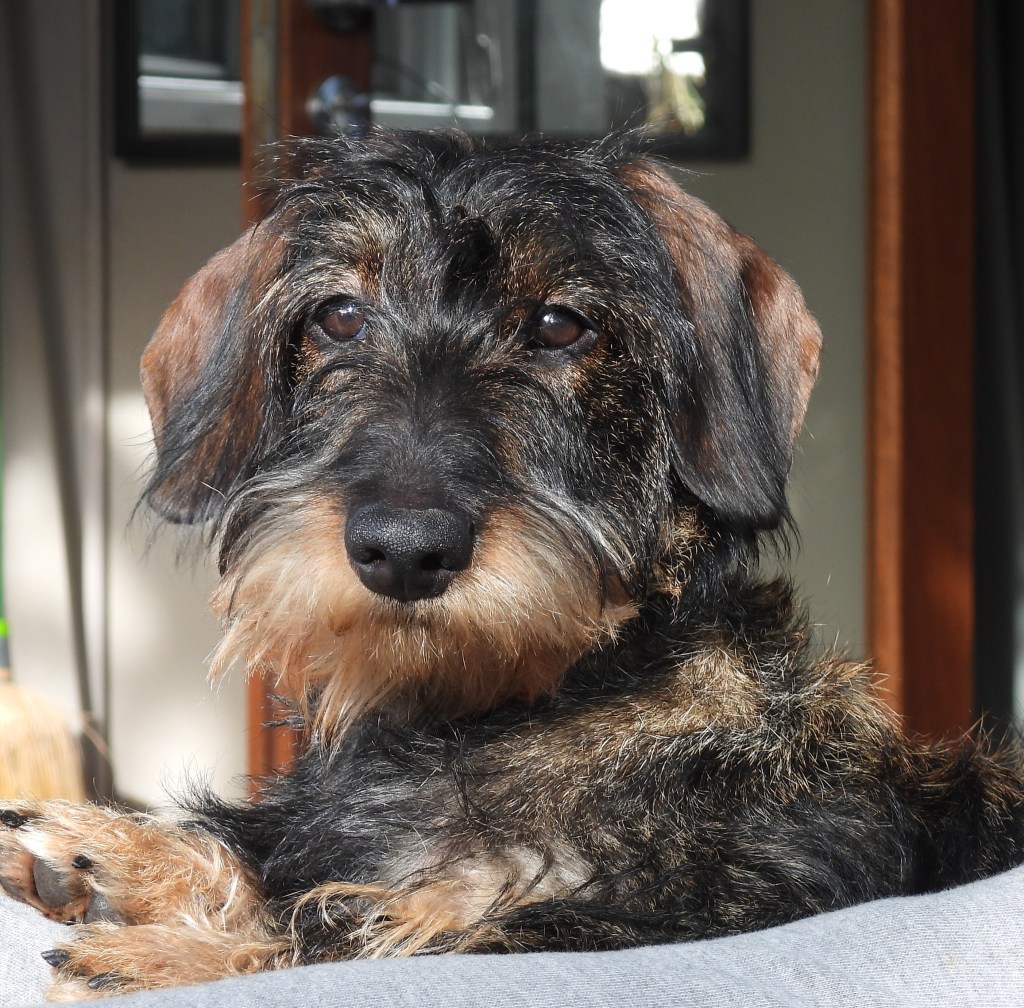
We also welcomed a new family member this year, her name is Lucy Maud Montgomery, but we call her Monty for short. She is very naughty and cheeky and I love her without end. We still miss our boys every day. When you love without measure your heart expands beyond limits, not even the universe will contain it.
This year I have felt a little like a spiderling in my writing world of short fiction, casting my spindle webs to the winds and seeing where they drew me. I have found new and deeper connections through all my writing groups. Both here in Fremantle, with Meg, Bella and Lissy and also online with friends from all over the world providing endless encouragement, sharing skills, support and inspiration. I aspire to be half as creative and talented as every one of them. So wonderful to also meet two of my online writing friends face to face for the first time in London. I can’t say enough about finding your people. It is such a lift and beyond priceless in learning more about the craft at every level.
Writing buddies, Sara Hills (left) and Electra Rhodes (right) in London.
This year I was beyond honoured to have a story chosen for the international Best Small Fictions anthology, a collection of work from 110 authors from all over the world to showcase the best hybrid fiction in a given year. An unbelievable dream. Thank you to the editor who nominated me. I wish I could hug you. My story, In This Tale of a Suburban Tiger, the Part of the Mother is Played by a Bird was originally published in the Irish Journal, Splonk. The anthology is out this month. Find out more and preorder here.
***
I contributed five micro stories to the ravishing anthology, Into Your Arms, Nick Cave’s Songs Re-imagined, edited by Kirsten Krauth, curated by Neil A White and Mark Smith, published by Fremantle Press in late October. The Albany launch was an absolute joy. Organised by contributing author, Jon Doust, we were charmed and moved by Simon and Tammy London’s music, with Caleb and Ted, and Uncle Lester’s generous Welcome to Country and funky bass. Order here.
With author Jon Doust at the Albany Entertainment Centre for the launch of Into Your Arms, Nick Cave’s Songs Reimagined.
Thrilled to be invited to host at Writers Weekend for Perth Festival in 2024. I’ll be facilitating the panel On Beauty, talking to Christos Tsiolkas, Holden Sheppard, AJ Betts and Madison Godfrey. The event takes place on February 25th at 3pm in the Discovery Lounge at the State Library. Tickets are pay what you can but you MUST book. Full program and ticket details here.
***
It’s been a really good year for writing. I haven’t been particularly prolific, but I have had some great highlights. I won the London Independent Story Prize for Flash Fiction for a 300 word story, Let Him Bury His Face in the Dust. It will be included in a print anthology out soon. You can read my interview here. I won the Fractured Lit Anthology Prize for my story, Into the White, you can read it here. There were 20 winners chosen for the US journal’s third anthology. I came second in the UK Flash 500 Award with Pumpkin and second in Aniko Press’s short fiction competition for my Wild themed piece, 1989. I have work in the upcoming Night Parrot Press memoir anthology and New Zealand Flash Frontier.
***
Charlotte Wood spoke to me about her new book, Stone Yard Devotional in November, a mesmerising account of a woman who gives up everything, home, husband and work to go and live a cloistered existence in a monastery outside Monaro. I found the form of this book, fragmented and quiet, absolutely compelling. My pick for best book of 2023. Thanks for inviting me, New Editions Bookshop. Obviously, I am now even more in love with Charlotte than I was before which was quite a lot.
With Charlotte Wood at the Old Courthouse in Fremantle
Fantastic conversation at UWA with Anna Funder, author of Wifedom, the story of Eileen O’Shaughnessy who was married to George Orwell. It’s also the story of how patriarchy renders the work of women invisible. I loved this book. Her writing is sublime. I was in a feverish feminist rage for months after. She’s so impressive. Thank you for inviting me, Boffins Books.
***
Charlotte Ree spoke to me about her memoir and recipe book, Heartbake at the glorious Open Books in Mosman Park. Charlotte was a delight, full of raw candour and hilarious wisdom. And really good recipes. It was also one of the several times I was lucky enough to have been on the receiving end of Kristy Diffey’s biscuits. She is a baking book biscuits legend.
***
What a heart bomb! Launching AJ Bett’s new book, One Song at the Fremantle Worker’s Club. A group of teenagers have just one weekend to write and record a song to enter Triple J Unearthed High. A joy of a book about finding your own path. AJ is an incredible writer, full of intensity and passion and I love her work. I made a bad joke in my launch speech but I think I got away with it.
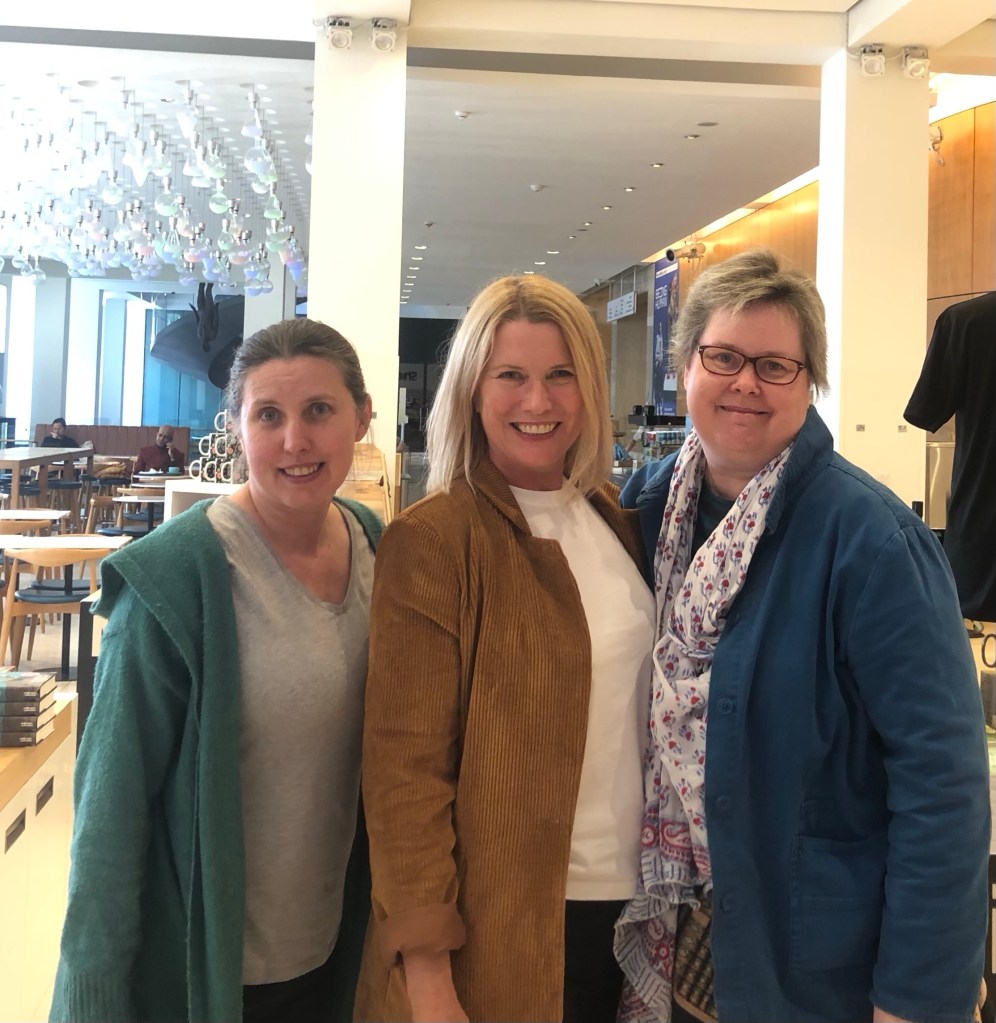
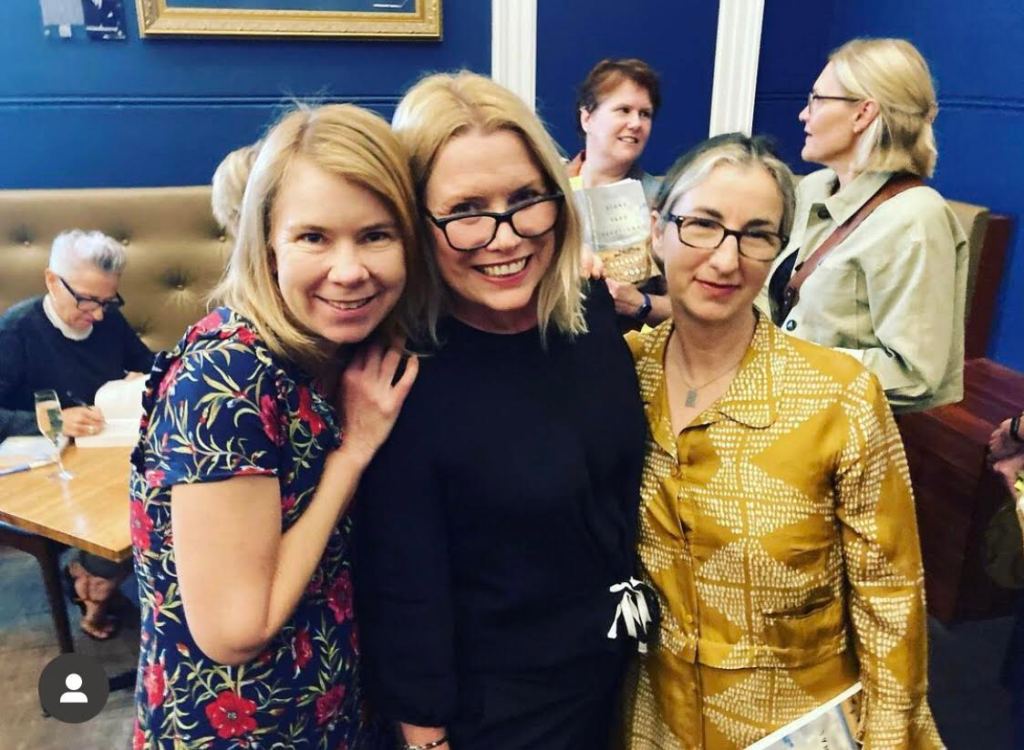
With authors, AJ Betts (left) and Belinda Rowe (right) at the Charlotte Wood event, November 2023.
When I was a kid and my mum had lost patience with the state of my bedroom and insisted I clean it, I had a last-resort technique if procrastination, sulking and tantrums all failed. I think the corporate speak for it is ‘leaning in.’
I was a really messy child so we’re talking substantial levels of leaning in here. By the time my mum put her foot down the state of my room had hit alarming states of disarray. Grotty sheets. Layers and layers of dirty washing scattered haphazardly on all surfaces, including the floor. Mouldy sandwiches under the bed, various dishes, and old drinks long since evaporated into an unrecognisable film of filth growing on glasses. Mum’s patience usually snapped when the crockery count under my bed exceeded that available to the rest of the family.
When there was nothing for it but to crack on, I was good at concocting elaborate scenarios to help me get in the mood. Storylines were gleaned from various books I had read. My particular favourite for cleaning my room was neglected waif at the mercy of a) evil mother, b) evil stepmother or c) evil witch; whatever worked on the day. I’d don a “thin shift” in which to shiver – an old nightie, a threadbare cotton dress, preferably faded, extra points if also torn. From the kitchen, a hunk of rough brown bread and a wedge of cheese for my meagre lunch. I’d romantically channel my inner put-upon drudge and I’d clean. It got the job done. If my mother indulged her nasty habit of poking her head around the door from time to time, to laugh wildly, clap and say, “Exit stage right, Gillian,” well, that’s on her conscience.
I employed similar tactics on regular cleaning days in our house. Whatever else we had going on in our lives, Saturday mornings were religiously set aside for housework. We were all assigned tasks and expected to complete them before hanging out with our friends or in my case, returning to my room to read and add to the ever-increasing mess. If you had the loungeroom for example, it was your role to sweep out the fireplace, chop wood and set a new fire for later. Wash the ornaments, (we owned a lot of Wembley Ware acquired from various swap meets and Fremantle op shops) dust, vacuum, clear away any bottles and glasses and put the records back in their plastic sleeves and their covers and back into neat alphabetical order on the shelf. There were always lots of glasses to clear and records to put away on a Saturday morning. Mum and her boyfriend, Baker enjoyed late-night parties which involved loads of music, no small amount of weed (it was Fremantle in the 70s) and vast quantities of home-brew beer and cheap wine. I was an excellent if not enthusiastic cleaner by the time I was 12.
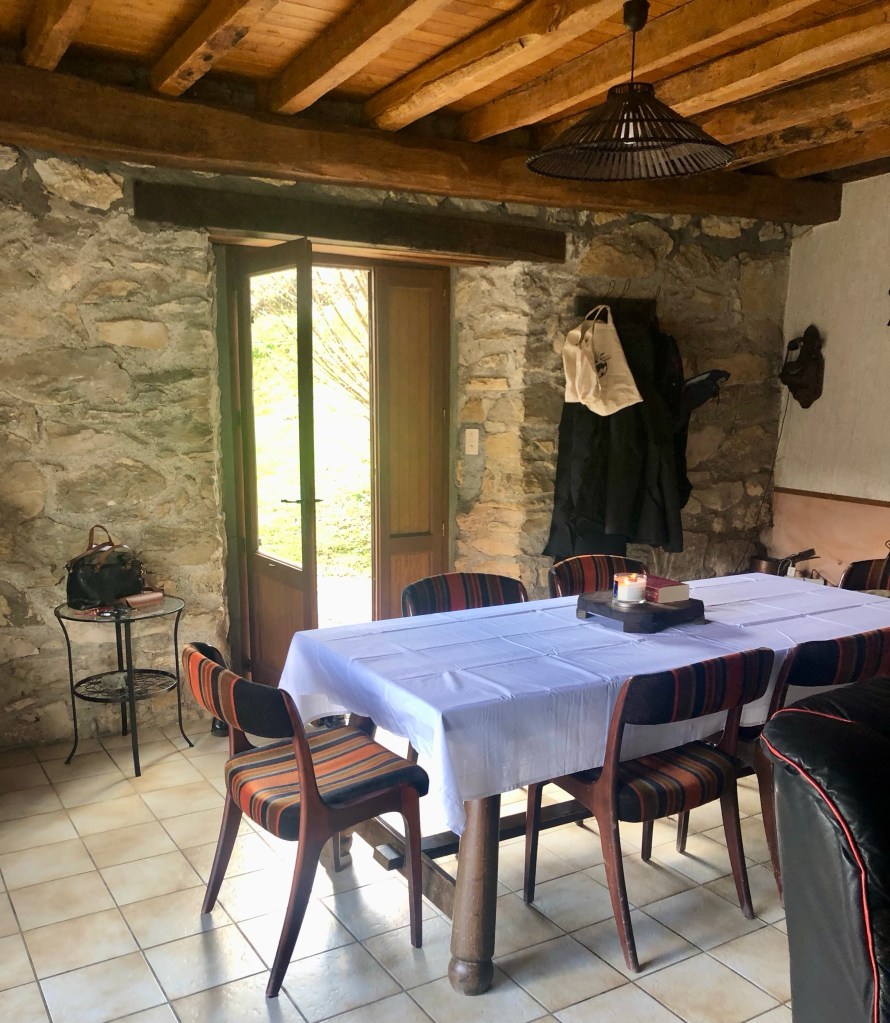
It was these skills that were brought to bear this week when we arrived at our overly rustic French gite in the Pyrenees for a stay of eight weeks after spending almost three months in a charming newly renovated apartment in the old town of Montpellier. The mountain gite was less charming, more rodent-infested dust trap. It had clearly been shut up over winter and smelt like Nosferatu’s armpit. We spent a night panicking, trying not to turn on each other, apologising, trying not to turn on each other again, wondering how we could cut our losses, gamely attempting to sleep and simultaneously holding our breath in order to avoid inhaling centuries of murk. Then we decided to make the best of it. Spurred on by both the world-class mountain views outside and the fact that we had invested the remains of our travel fund into two months’ accommodation here and didn’t have much choice.
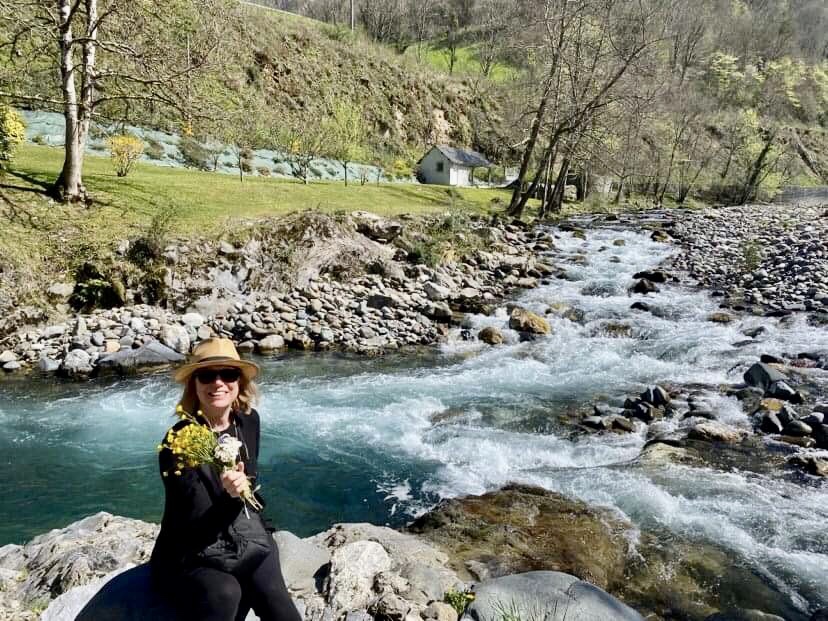
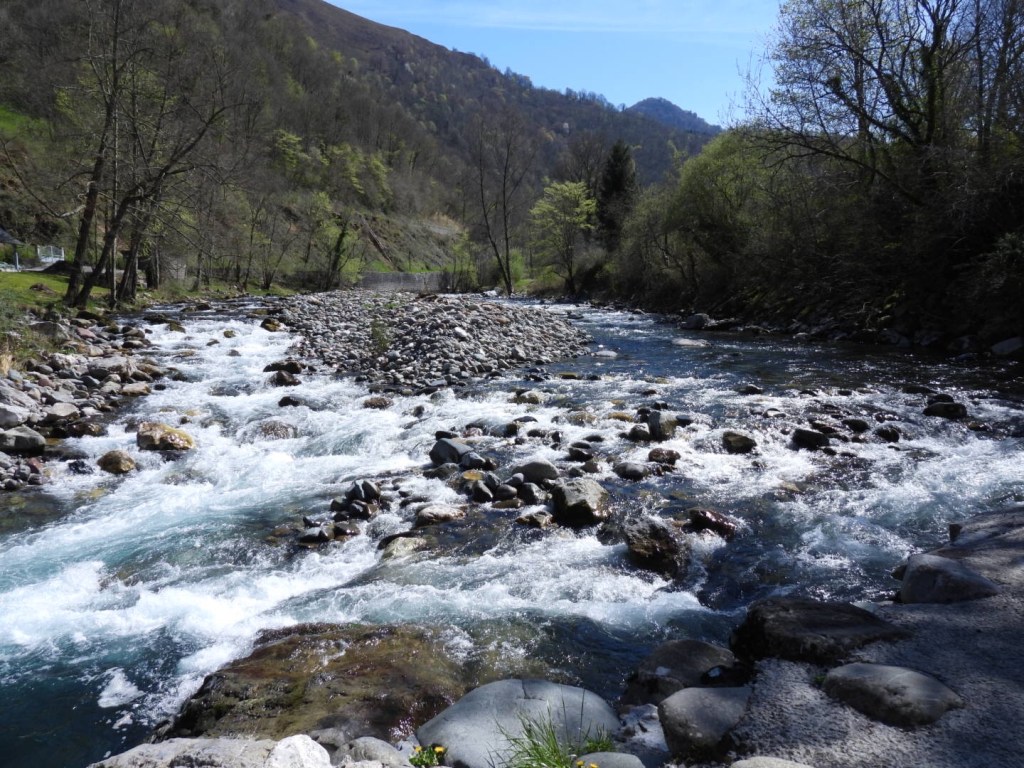
To be honest, things didn’t look much better in the morning, from the inside at least. The house was still dusty, manky and there was still mouse poo in the toaster. But every time we started feeling a little overwhelmed with the task ahead we nipped outside and copped another look at the startling landscape. Mountains for days. Snow-capped, stony-peaked mountains. Rolling green mountain hillsides. Trees. Burbling brooks, roaring rivers, so clear you could count the pebbles on the riverbed from a distance. Cows wearing bells gazing at us placidly from our front garden. When the clouds cleared, there were mountains behind the mountains. And more after that. So, so beautiful. One-dollar house, million-dollar views.
We started to think we might have a shot at making this work.
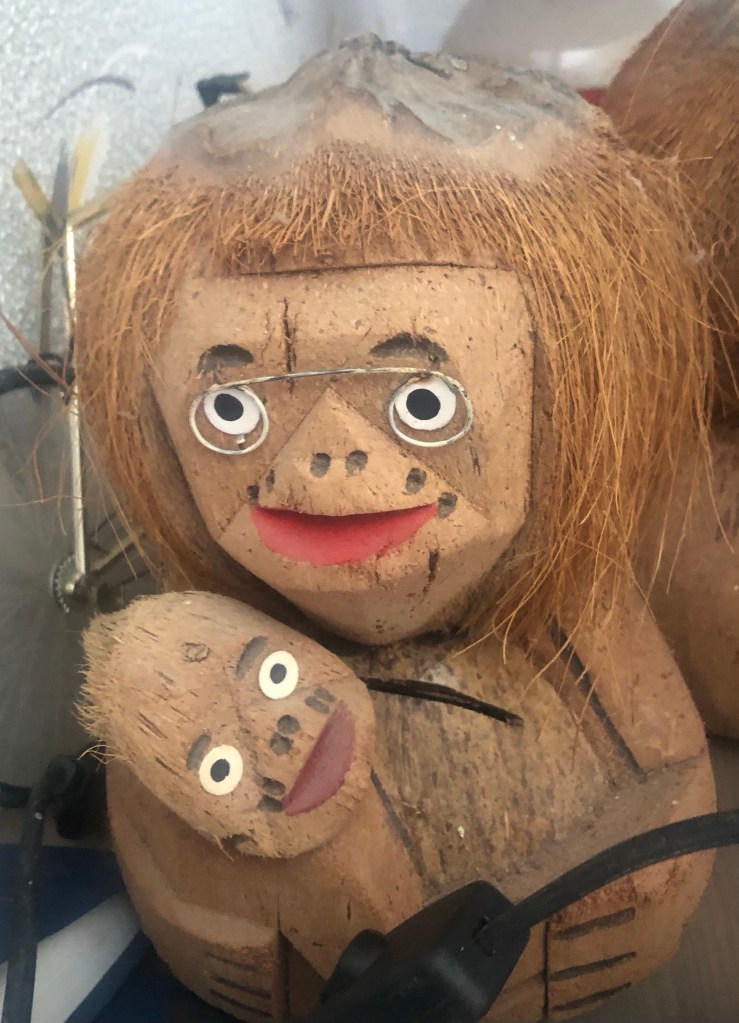
We have since cleaned the place within an inch of its life. Bedding, kitchen stuff, ornaments. Man, there are some weird ornaments here. I’m not sure what would win, the coconut monkey couple or the antique cow-bell complete with bone donger dangling from the ceiling. We scrubbed the oven with dishwashing tablets and steel wool, (I’d read something about the dishwashing tablets, maybe in the New York Times which I mostly visit for Wordle. Anyway, it worked. Huzzah.) Happily, there are plenty of cupboards so once cleaned, most of the knick knacks could be put away, clearing some surfaces and giving the place less of the air of an abandoned, overcrowded barn.
And believe it or not, underneath decades of dust the place isn’t all that bad. You might even call it beautiful. The oven is definitely circa the 1970s and an ugly mission brown but the colour of it hides the dirt we can’t scrub off, so, you know, out of sight, out of mind and all that. And it works really well. The stone walls of the gite are actually very charming and the fireplace is big, open and inviting.
Random things are inexplicably clean. All the windows are sparkling. Some of the rooms are lovely. Our bedroom is plain but clean and very comfortable. The bathroom could almost claim to be modern. It has a deep bath with water hot enough to make tea if you fancied doubling up on the washing of your person and a four-fruit herbal. Plus, there’s a view out of the bathroom window from the bathtub across the mountains. Mind you, every window and doorway here has a view across the mountains. You could say the local vista is showing off.
One of the piles of strange paraphernalia we found stacked up in a corner of the loungeroom turns out to be garden furniture, so we drag out two tables, a few chairs and a lie-low and give them a wipe. An outdoor umbrella is so crusted in grime we lather it up with dish soap and hide it out of sight behind the shed waiting for the next rain shower.
We take a run into the nearest large town about half an hour’s drive away and pick up a few essentials. Wine. A new toaster to replace the one riddled with mouse droppings. Wine. A new kettle to replace the one that wasn’t supplied to start with. Wine. New white pillowcases, white tablecloth and fresh tea towels. Wine. And cheese. Sorted.
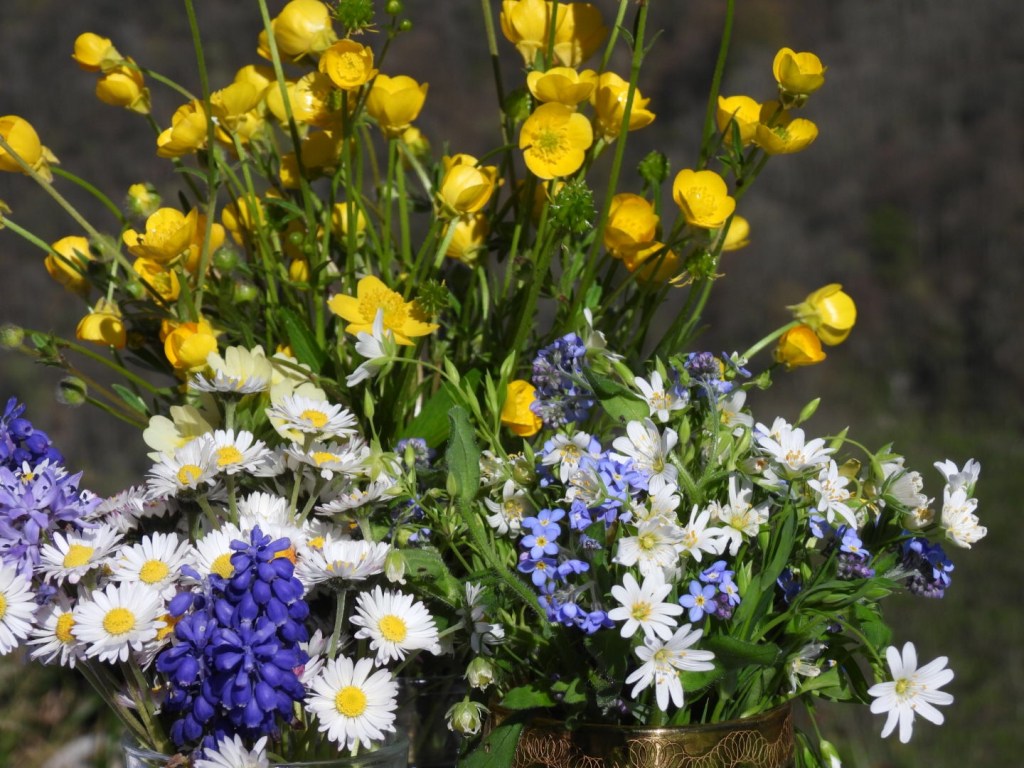
We stuff everything else we don’t like in the spare bedroom and shut the door. Arrange our new things in the house, Glynn chops wood and sets a fire for later while I spend a wonderful afternoon picking flowers in the garden. We have buttercups, daisies, grape hyacinths and something called ‘Siberian Bugloss’ which is a tiny, cornflower blue flower with a bright yellow centre. The flowers that grow wild here in paddocks and on roadsides are joy. I have stuffed old glasses and jugs full of them and laid them out over every surface and windowsill. The sills are gloriously deep here. You could easily sit in them. If I owned this place, and I’m increasingly wishing I did, I would make window seats everywhere.
The seeds of a new storyline have been sown, and I can feel the green shoots of them peeking through the surface of the soil, turning their faces to the sun. In this story, I’m not so much of a spoilt Australian grumbling because our holiday house deep in the Pyrenees in rural France wasn’t as clean as I’d have liked. In this story, I’m a cross between a farm wife and an older French version of Heidi, with maybe a touch of Julie Andrews in the opening scene of The Sound of Music where the music swells and she sweeps into sight, arms outstretched revelling in a spring mountain morning.
Not to say there’s still nothing to be concerned about. More for the locals obviously, than for us. I’ve started eyeing the neighbour’s cows, wondering how I’d go at milking them. Or making my own bread. Churning my own butter. Frolicking about the hillside. Increasingly, the cows seem uncomfortably aware of my scrutiny and are starting to look slightly alarmed. We have named them Bonnie and Clyde.
What I’m reading.
I’m reading Margaret Atwood, Old Babes in the Wood. This book is a joy. I’m halfway through and I’ve started slowing down to make it last longer. There is such a wild, sparkling range of stories here, from an Octopus-alien, tasked with entertaining imprisoned humans by retelling old fairy-tales, a young girl trying to work out if her mother is a witch and a wonderful conversation with Atwood and George Orwell, channelled through a medium. They’re interspersed with stories about a married couple in their later years, Tig and Nell, and these are beautiful. Margaret Atwood is 84 now, and her husband and life partner, Graham Gibson, to whom the book is dedicated, died as the book was being written. Death is threaded through these stories and it’s deeply sad and raw, but it frames grief as a lens through which to measure love. A kaleidoscope of ordinary moments both before and after loss, that together offer insight into what it means to love across a lifetime. It’s the most perfect collection I think I have ever read. I can never decide if I think Margaret Atwood or Helen Garner is the greatest writer ever born, and with this book, I am tipping slightly more toward Margaret. I know that will change the second I pick up Helen again, but I love the tussle.
What Glynn’s playing
Glynn’s in charge of the fire and our Pyrenees playlist so here’s a selection of what we’ve been listening to.
The Broken Circle Breakdown Bluegrass Band: Wayfaring Stranger
It’s not so bad in here. I’ll admit to a few existential hiccups. One of them is constantly forgetting we’re in a different world and carrying on for a second like nothing has changed. It’s an odd feeling when I remember a lot has changed. Does anyone else occasionally feel a flash of being in a movie that was written a long time ago?
The thing that weirds me out most is how quickly I seem to be adjusting. I’m not one of those people demanding our governments do things differently. Or writing to newspapers or posting outrage and fear on their Facebook pages or sending home remedies via messenger apps. I’m keen to be quiet and stay small. I am compliant with the new rules on travel and physical distancing. I’m apologetic when I need to poke my head above the parapet to stand too close to people in supermarket aisles or to ask for Ventolin at the chemist where they stress-laugh at me for not knowing they were cleaned out ages ago. There is a lot of stress-laughing going on, I have noticed.
My social media is all about posting my attempts to grow vegetables and uplifting things to read. My online book-club is a haven to escape to after the relentless barrage of news I can’t avoid when I go to work on the radio every day. I’m posting about being kind A LOT. I have become a living meme. I am a poster on your wall of a kitten hanging from a tree by one paw with a caption that says HANG IN THERE.
There is something in me I am only slightly ashamed of, which is ok with having quieter times. The alone times. I am good at this and my life before, just weeks ago was too busy, and too noisy and I kept getting ill because I was running too fast, doing too much, thinking too rapidly too often and full up.
I have wondered, of course I have, if the planet has felt like that too, these last few hundred years since we got a bit too clever for our own good and forgot we are connected to it, that we rely on its good health. I wonder if it feels like many of us do when we have taken on too much, but we don’t know how to stop or what to cut back on because it’s all become too normal, we think we need it. Now, like many of us, it’s sick and gone to bed with a gentle book to rest and rejuvenate and think about making big changes in its life. Who hasn’t considered that maybe we’re the virus, and COVID-19 is some kind of earthy immune system fighting to claw back some room to breathe. Literally anti-bodies.
I have wondered, of course I have, what the world will look like when we come out of this in three months or six months, or a year or more. Will there be substantially less of us? Will our grief cripple us or will it compel us to be present with our hearts? Will the air in our biggest cities remain cleaner? Will dolphins stay in waterways they had abandoned for so long? Will we decide there’s a lot to like about living more quietly? Will we remember the value of community and connection now the gap between the selfish and the altruistic is so clear? Will we stop thinking we can control on our own terms our natural surroundings and realise how utterly connected and dependent and vulnerable we are?
Small things are making me happy in my crisis. I’m re-reading books I read as a child, and I’m planting the off cuts of my kitchen scraps in pots in my garden and watching them grow. I’m particularly proud of my spring onions. Every day I visit the golden orb weaver that has set up an elaborate, glittering web across my back garden. She has chosen her spot well, she has many dinners wrapped up tight and tidy, and hung like a string of beads above her. We call her Mavis, after a song we like. I listen to the small birds shrieking in the trees outside my bedroom window, and it doesn’t escape me they are oblivious to everything but their turn to fluff their feathers in the bird bath.
So, in my crisis, I have learnt some things about myself.
I have learnt to sit with my love for my mum and my dad. I knew it before, of course, but I didn’t think about it. Now I am thinking of it all the time and I’m glad because they’re still here and I can miss them and ring them up even if I can’t go to see them. I’m 53 but I’m still their child and I still look to them both for comfort and find it in their voice. I’ll still be their child when I am older and my face is all deep lines, and my neck is loose and my skin is crinkling on my forearms. I’ll still be their child and my child will still be my child and her children will still be her children and so on. It is as it’s meant to be. I feel that very closely now, and I’m grateful for it.
I am reminded every day that the love of reading is a gift beyond measure and I am as lucky as someone who’s been born with a great talent to have this wonder at my disposal. It’s the comfort and thrill of being wrapped in an other-worldly cocoon crafted entirely and uniquely by the author and me. Together, with their words and my surrender, we spin our own magic never to be re-created in exactly the same way again, even when we read a book twice.
There’s something special right now in the physical books of my childhood. I have once again picked up my old copy of Anne of Green Gables. I found it originally in my own mum’s bookshelf as a kid and adopted it as my own, so I don’t know how long we’ve had it. My copy is tattered beyond being even vaguely readable to anyone else. Its spine is cracked, it’s heavily stained from age and years of eating vegemite toast and drinking milo while reading, whole passages are obscured but I have read it so often it’s easy to fill in the missing bits. Some of the pages are torn from an unfortunate habit I had as a child of absent mindedly tearing off the corners of books and eating them while I read. No I don’t know why either. There is so much love in this one book, of the story, of reading, of my warmest, safest memories as a deeply introverted child. I could not love it any more than I do. If I were a book and not a human being, this one reflects the most of me. I am keeping it by my bed.
I am appreciating the sense of my husband in our home and the feeling of peace that gives me. Even when we are not in the same room, his presence changes the air somehow to something warmer than when he’s not here. I would say, if I wasn’t thinking about it, that I just like it better when he’s here. I would say when he’s not here I can feel his absence as something missing and not right, and I don’t sleep well and I don’t relax in the same way. Even though I need to be on my own quite a lot. Even though I often crave silence. I think I’ll go and give him a kiss on the top of his head right now. (I did, and he was a bit puzzled if I’m honest. I probably did it intensely.)
I would not diminish what’s happening right now in the world. I’m afraid. My chest feels tighter most days, and I’m joking but not really with friends about what to do if we’re dying and there are not enough ventilators. I’m worried about those who are doing it very tough right now and those who find themselves unwillingly on the frontline. Those who have lost their safety net and those who never had one. I’m trying not to succumb to an urge to check if toilet paper’s back in the supermarket even though I have enough.
I’m also holding on to the deep belief that kindness gives you strength and the more tightly you cling on through fear the less secure you become. I think when we come out the other end of this, whatever that looks like, we will want to feel we were kind when we could be and that we looked for opportunities to show one another compassion. We will want to feel that we did our best.







 Gillian O’Shaughnessy