These gentle days

“I felt like lying down by the side of the trail and remembering it all. The woods do that to you, they always look familiar, long lost …. like an old dream, like a piece of forgotten song drifting across the water, most of all like golden eternities of past childhood…” Jack Kerouac.

Nature is never in much of a hurry, is it? Everything seems to move more slowly here in the Pyrenees, it would be graceless, somehow, to rush through with no appreciation for age and for the old time that is steeped deep into the stone. Mountains, rivers, and old forests will make you feel smaller in the best way.

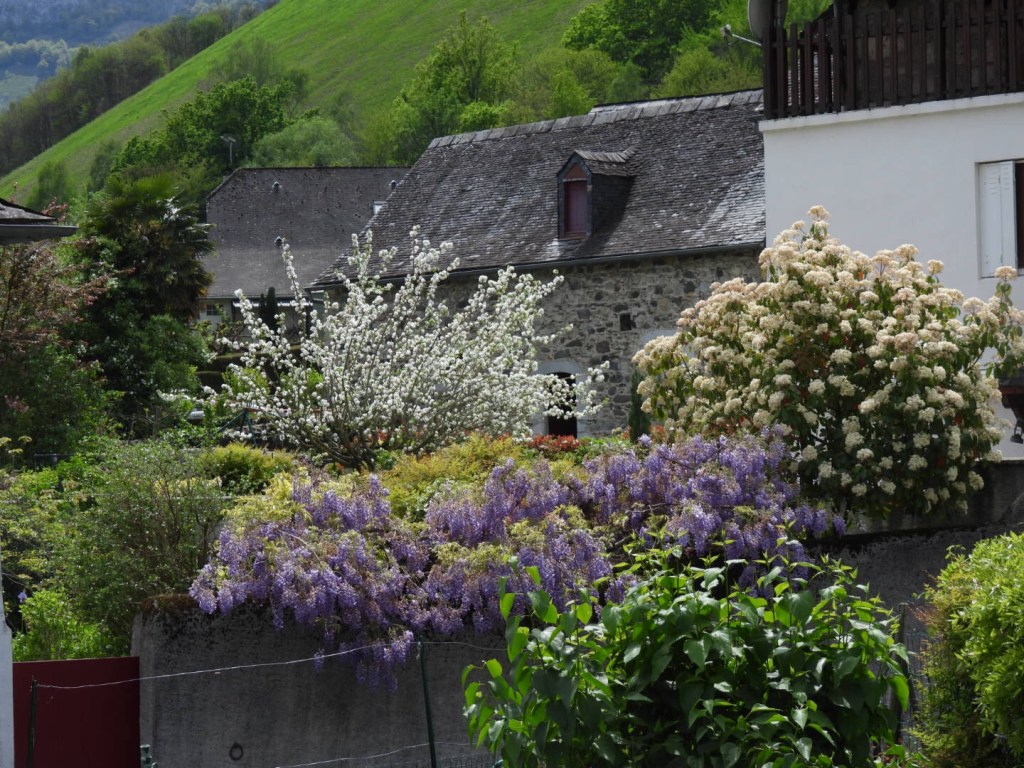
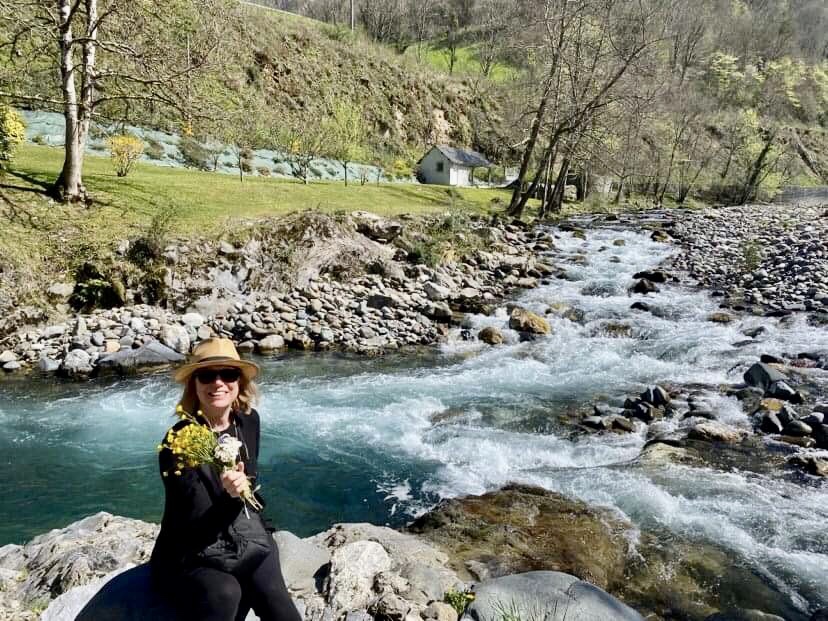
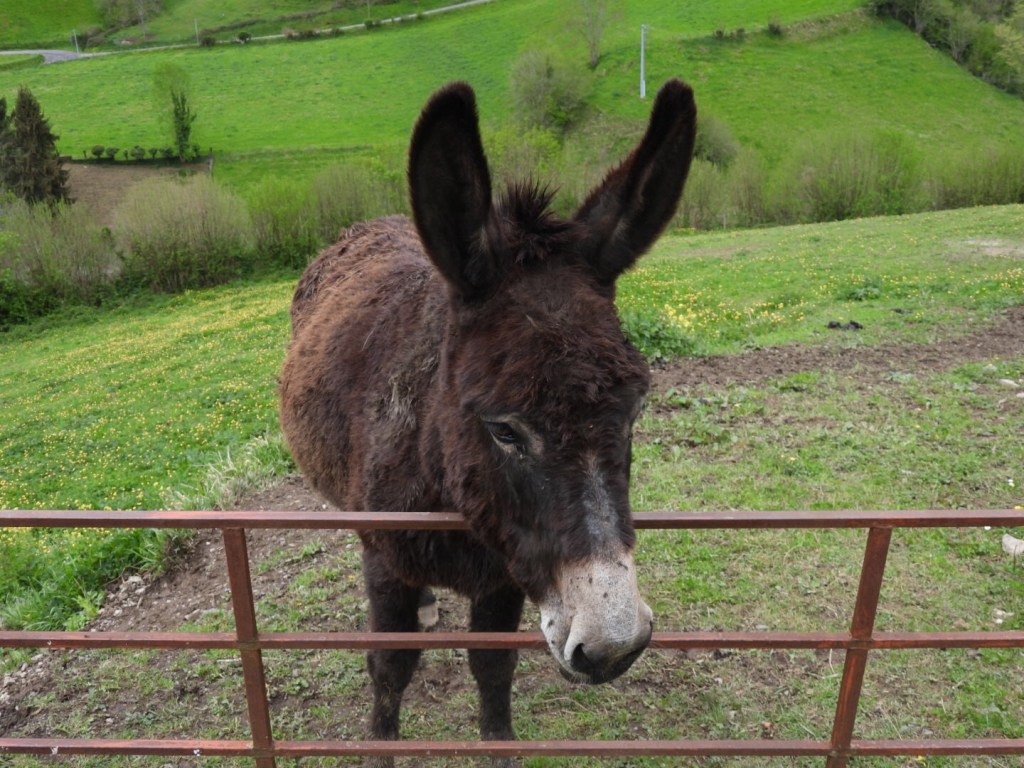
So, I have been perfecting the art of moving at a less frenetic pace. Walking along the mountain trails, stopping every few steps to take in the peaks – many still capped in snow almost a month into spring- and the green valleys and smooth undulating hills. We stop for lunch or afternoon wine in tiny villages dotted along the river, filled with shuttered stone houses, laneways festooned with rambling roses and pale purple wisteria climbing and drooping from fences and barns and over porches. In the pastures and along the roadsides, long grass is bright with buttercups and daisies and forget-me-nots. The woodland paths, shaded by oak, birch, fir and beech trees, promise carpets of bluebells and violets, wild strawberries, and ferns. Butterflies, colourful as flowers, some as tiny as a newborn baby’s fingernail, twirl in spirals in the most joyful of spring dances and the red kites and griffon vultures glide in a high sky across the day. There are donkeys, sheep, sturdy draught horses and cows with bells around their necks which clang a gentle rhythm that travels through the valleys. They would be out of time with any of the songs I’m used to hearing but fit in perfectly with the music of the Pyrenees; the songbirds, the woodpeckers drilling out their spring nests, the whistle of raptors and the rush of river and stream over stone. It’s impossible to move through here unaffected.

The Pyrenees are full of wonder. It’s a huge mountain range, a natural border between France and Spain and Andorra to the east. It covers 19,000 square kilometres and includes 200 summits over three thousand meters high. There’s a small population of brown bears that roam wild here, and wolves, once extinct in this area, which have been reintroduced. There are four kinds of vulture, including the awesome Lammergeier or Bone-Breaker and the Griffon Vulture, with the classic bald head, long drooping neck and hunched brown shoulders. We’re in the western Pyrenees, staying just outside the small villages of Sarrance and Bedous. It’s as pretty and magical a place as I have ever seen and I could make a small nest here and settle for life, one little bird among many.

The people are, like everywhere else we’ve been in France, delightfully friendly. They know how to live slowly. Even the supermarket closes for two hours over lunch. Very few of those we have met speak any English, and the bloke, who can make himself well understood in the city, struggles to speak a French the locals here can follow. There’s definitely a difference in pronunciation, we think that’s due to the proximity to Spain, a lot of people speak a mix of Catalan and French, or a dialect somewhere in between here. I have no hope, I can manage, bonjour and I can apologise for my terrible French, desole but I have generally resorted to charades. No matter, the locals are very welcoming and we get by. It’s not such a huge tourist area, too far from the ski slopes, but there are a lot of professional cyclists who stay in the area, they stream past us often on these steep and narrow mountain roads, training for the Tour de France which runs through this region. You’d have to be brave, that’s all I can say about that.

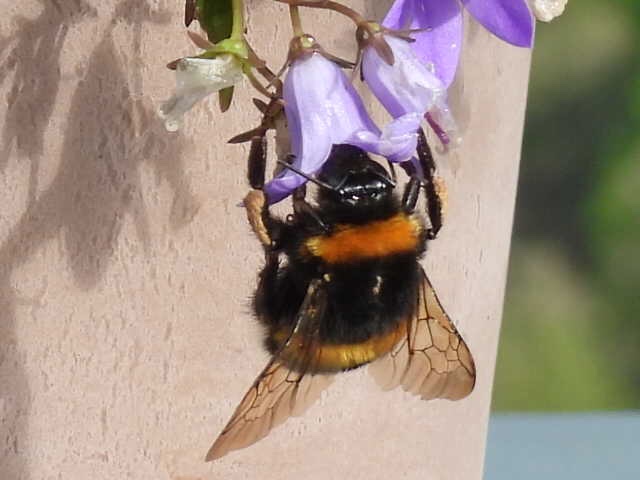
Aside from my obsession with nature, I’ve taken to other gentle pastimes. I’m probably the most wholesome person that’s ever been born, I think. Apart from the wine. I’ve taken up baking bread, with various levels of success, and I am painting watercolours. I have no talent for the latter, but I have come to realise in the last few weeks that the journey can be more important than the destination and that not everything has to be perfect to be perfectly fun. I am loving the mindful peace of sitting in the sun out the front overlooking the valley squinting at a dandelion or a buttercup and trying to mix a yellow that comes close to the sunny glow of them. Or crouching in a patch of long grass, admiring an exquisite spider-web, jewelled by dew or trying to absorb the detail of a fat bumblebee in flight or with its head buried in a flower, so I can fail utterly to capture it on paper later.
I know I say this every time, but I love it here. I feel small and happier for it. There is nothing like being humbled by nature, connected; reminded of your place within the timeless immensity of it all. Of finding overwhelming wonder above you in the sky, before you in sweeping landscapes of stone and water and tree, and at your feet, in myriad miracles taking place before your eyes if you can forget yourself long enough to see them. I am remembering. I am remembering.

What we’re listening to: Glynn’s Pyrenees Playlist:

Basic bread recipe

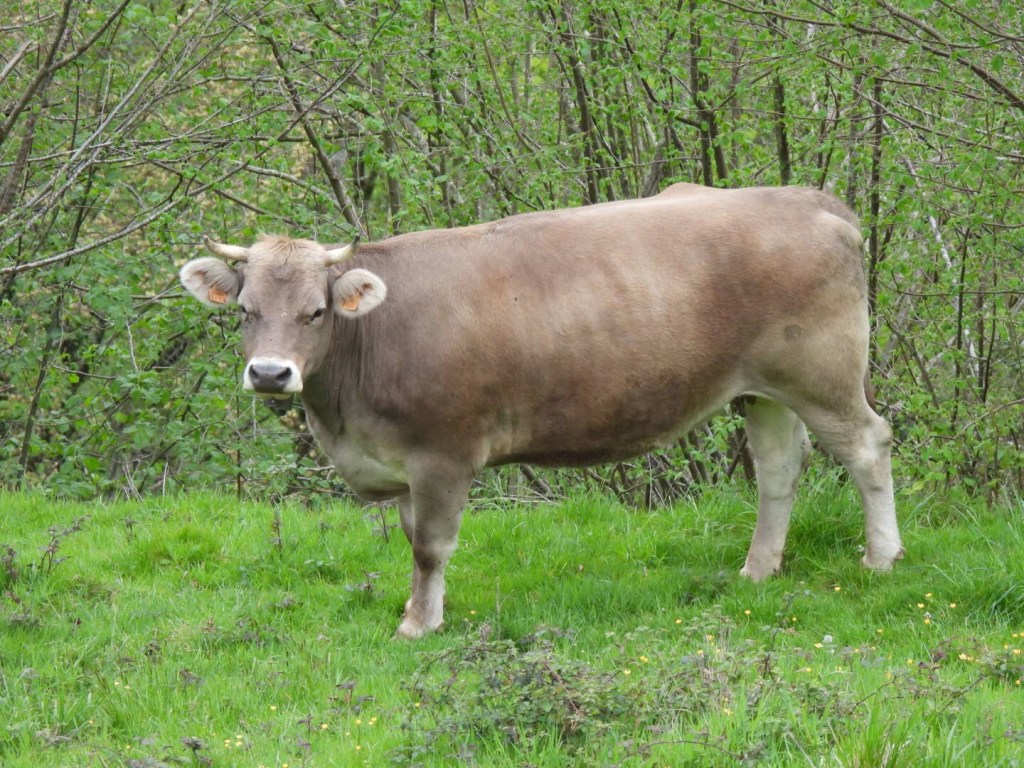
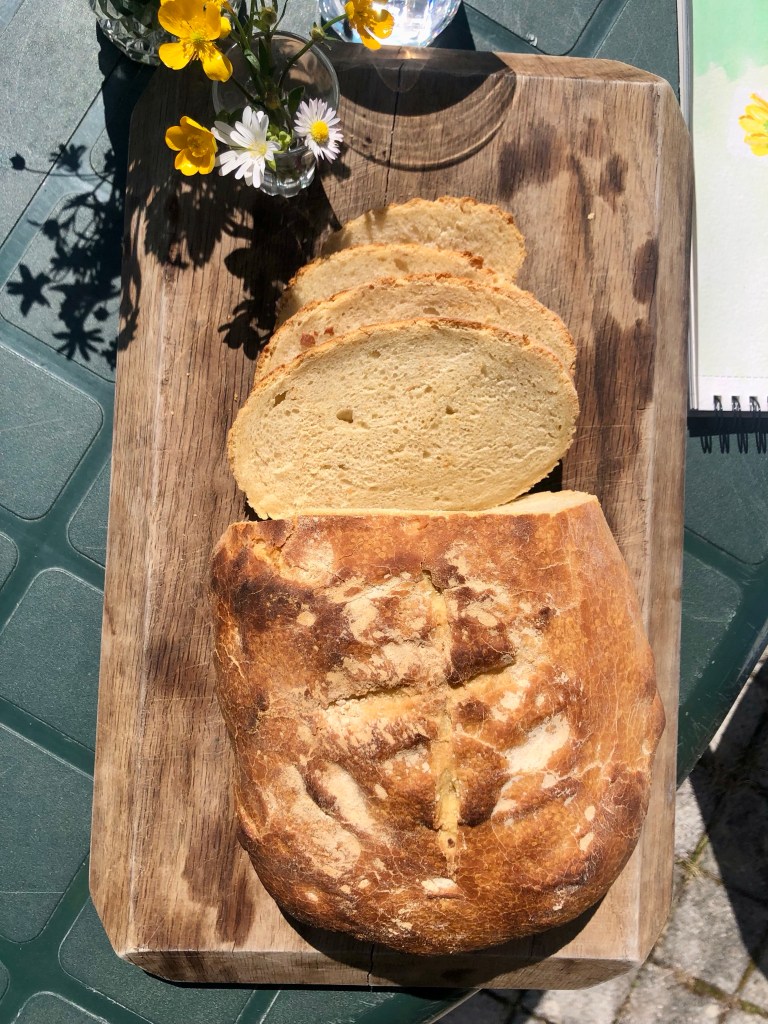
Things are a little rudimentary in the kitchen here, I have no scales and the measurements in my recipes doesn’t quite match the standard French measurements so I have to guess the yeast and flour. But the oven’s good and the loaves are coming out ok. I had forgotten how restful the process of making bread can be. I’m looking out the window at a garden full of wildflowers, and a vast expanse of Pyrenees mountain range and feeling pretty pleased with myself. I can hear the insistent, gentle clang of cow bells which means the neighbour’s two cows, which we have named Bonnie and Clyde are ambling across the field our way to poke their gentle heads through the brambles and say hello.

Ingredients

Two cups of strong bread flour, white or wholemeal.

One packet and a bit of dried yeast.

Two teaspoons of salt.

One teaspoon of sugar.

Three tablespoons of olive oil.

About three hundred mls of lukewarm water. Too hot and you’ll kill the yeast, too cold and it won’t activate.

Method

Mix all dry ingredients except for the yeast roughly together, then add the yeast last and mix that in too.

Add olive oil and about half of the water. Mix well to a ball of firm dough. Add more water if needed.

Knead well for 15 to 20 minutes.

Shape into a round ball, place in a large greased bowl and cover in cling wrap or a beeswax cover. Cover again with a tea towel and leave to rise for at least an hour, best overnight.

When doubled in size, knead again briefly, shape into a bread-loafish looking ball, cut a cross in the top about 6 centimetres long and bake at 220 degrees c. until it looks nice and brown. You can take it out and tap its bottom if you like. It will sound hollow when it’s done.

I have safely stuck it back in to bake for a further five minutes if I reckon it needs it. It won’t be as consistently good as it would be if you have all the bells and whistles but it’s pretty hard to ruin bread entirely. Half the fun is having a go.
What I’m reading

I’m reading so much poetry at the moment, it’s fitting here in the mountains. Margaret Atwood, Sarah Holland – Batt, Emily Dickinson, Judith Wright. Dog Mountain is by K. Iver, a non-binary trans poet from Mississippi. I found this so beautiful and moving. Their book, Short Film Starring my Beloved’s Red Bronco won the 2022 Ballard Spahr Poetry Prize and they have a PHD in poetry. Follow them on Twitter @k_ivertown or kleeiver.com

Getting on with it

When I was a kid and my mum had lost patience with the state of my bedroom and insisted I clean it, I had a last-resort technique if procrastination, sulking and tantrums all failed. I think the corporate speak for it is ‘leaning in.’

I was a really messy child so we’re talking substantial levels of leaning in here. By the time my mum put her foot down the state of my room had hit alarming states of disarray. Grotty sheets. Layers and layers of dirty washing scattered haphazardly on all surfaces, including the floor. Mouldy sandwiches under the bed, various dishes, and old drinks long since evaporated into an unrecognisable film of filth growing on glasses. Mum’s patience usually snapped when the crockery count under my bed exceeded that available to the rest of the family.

When there was nothing for it but to crack on, I was good at concocting elaborate scenarios to help me get in the mood. Storylines were gleaned from various books I had read. My particular favourite for cleaning my room was neglected waif at the mercy of a) evil mother, b) evil stepmother or c) evil witch; whatever worked on the day. I’d don a “thin shift” in which to shiver – an old nightie, a threadbare cotton dress, preferably faded, extra points if also torn. From the kitchen, a hunk of rough brown bread and a wedge of cheese for my meagre lunch. I’d romantically channel my inner put-upon drudge and I’d clean. It got the job done. If my mother indulged her nasty habit of poking her head around the door from time to time, to laugh wildly, clap and say, “Exit stage right, Gillian,” well, that’s on her conscience.

I employed similar tactics on regular cleaning days in our house. Whatever else we had going on in our lives, Saturday mornings were religiously set aside for housework. We were all assigned tasks and expected to complete them before hanging out with our friends or in my case, returning to my room to read and add to the ever-increasing mess. If you had the loungeroom for example, it was your role to sweep out the fireplace, chop wood and set a new fire for later. Wash the ornaments, (we owned a lot of Wembley Ware acquired from various swap meets and Fremantle op shops) dust, vacuum, clear away any bottles and glasses and put the records back in their plastic sleeves and their covers and back into neat alphabetical order on the shelf. There were always lots of glasses to clear and records to put away on a Saturday morning. Mum and her boyfriend, Baker enjoyed late-night parties which involved loads of music, no small amount of weed (it was Fremantle in the 70s) and vast quantities of home-brew beer and cheap wine. I was an excellent if not enthusiastic cleaner by the time I was 12.

It was these skills that were brought to bear this week when we arrived at our overly rustic French gite in the Pyrenees for a stay of eight weeks after spending almost three months in a charming newly renovated apartment in the old town of Montpellier. The mountain gite was less charming, more rodent-infested dust trap. It had clearly been shut up over winter and smelt like Nosferatu’s armpit. We spent a night panicking, trying not to turn on each other, apologising, trying not to turn on each other again, wondering how we could cut our losses, gamely attempting to sleep and simultaneously holding our breath in order to avoid inhaling centuries of murk. Then we decided to make the best of it. Spurred on by both the world-class mountain views outside and the fact that we had invested the remains of our travel fund into two months’ accommodation here and didn’t have much choice.

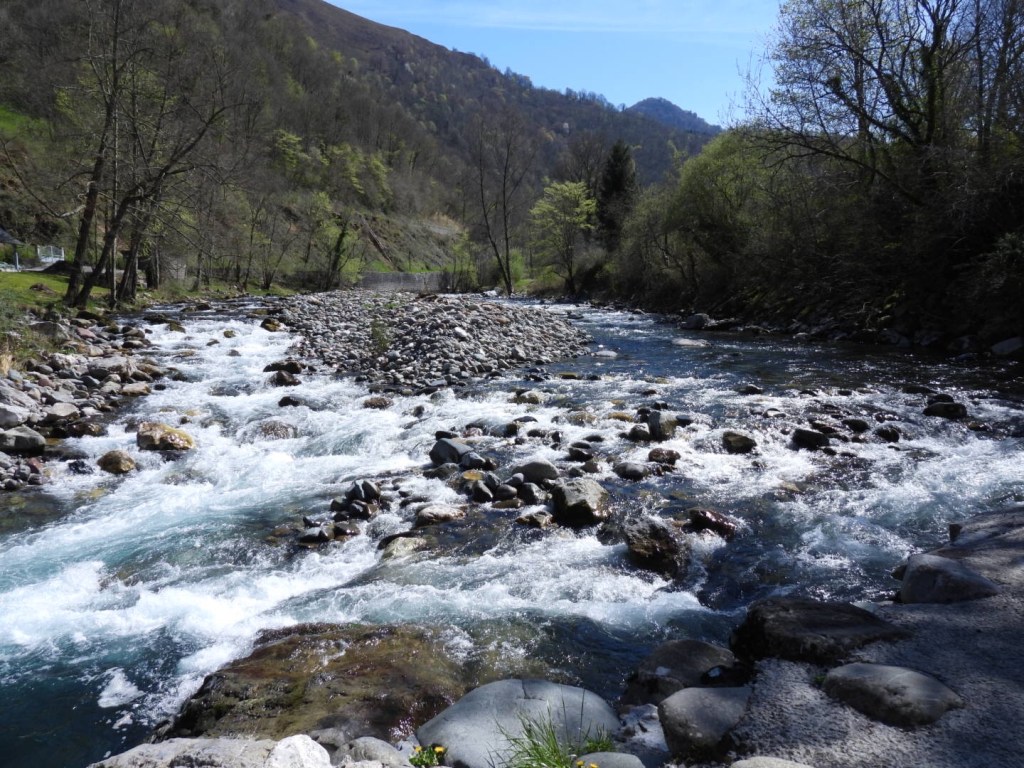
To be honest, things didn’t look much better in the morning, from the inside at least. The house was still dusty, manky and there was still mouse poo in the toaster. But every time we started feeling a little overwhelmed with the task ahead we nipped outside and copped another look at the startling landscape. Mountains for days. Snow-capped, stony-peaked mountains. Rolling green mountain hillsides. Trees. Burbling brooks, roaring rivers, so clear you could count the pebbles on the riverbed from a distance. Cows wearing bells gazing at us placidly from our front garden. When the clouds cleared, there were mountains behind the mountains. And more after that. So, so beautiful. One-dollar house, million-dollar views.

We started to think we might have a shot at making this work.

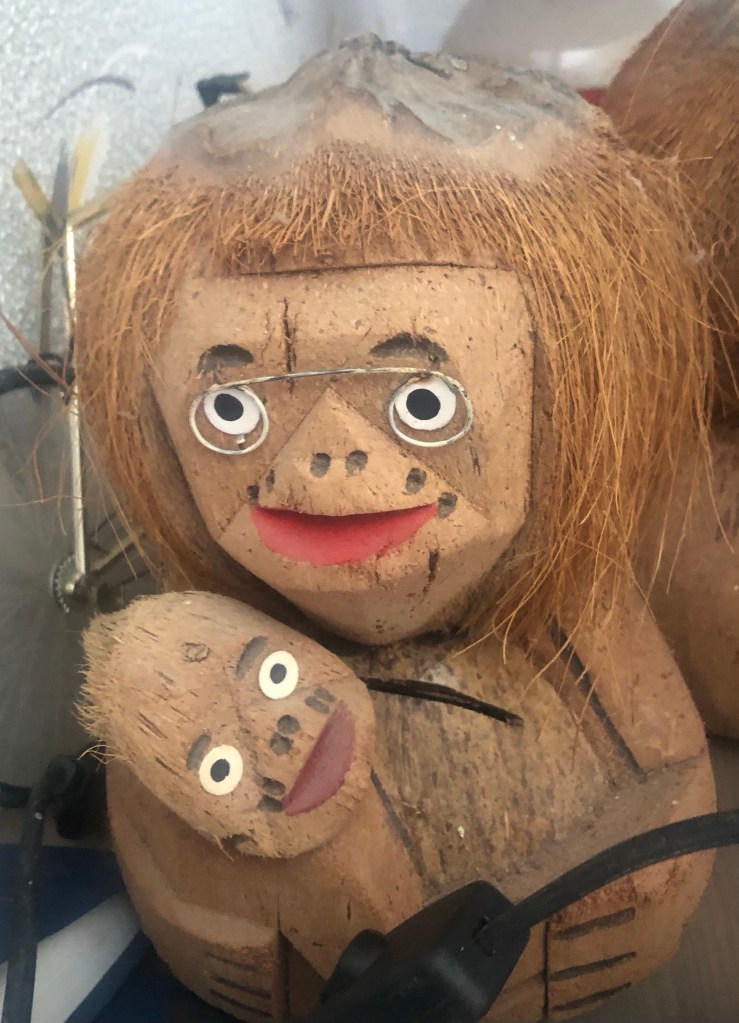
We have since cleaned the place within an inch of its life. Bedding, kitchen stuff, ornaments. Man, there are some weird ornaments here. I’m not sure what would win, the coconut monkey couple or the antique cow-bell complete with bone donger dangling from the ceiling. We scrubbed the oven with dishwashing tablets and steel wool, (I’d read something about the dishwashing tablets, maybe in the New York Times which I mostly visit for Wordle. Anyway, it worked. Huzzah.) Happily, there are plenty of cupboards so once cleaned, most of the knick knacks could be put away, clearing some surfaces and giving the place less of the air of an abandoned, overcrowded barn.

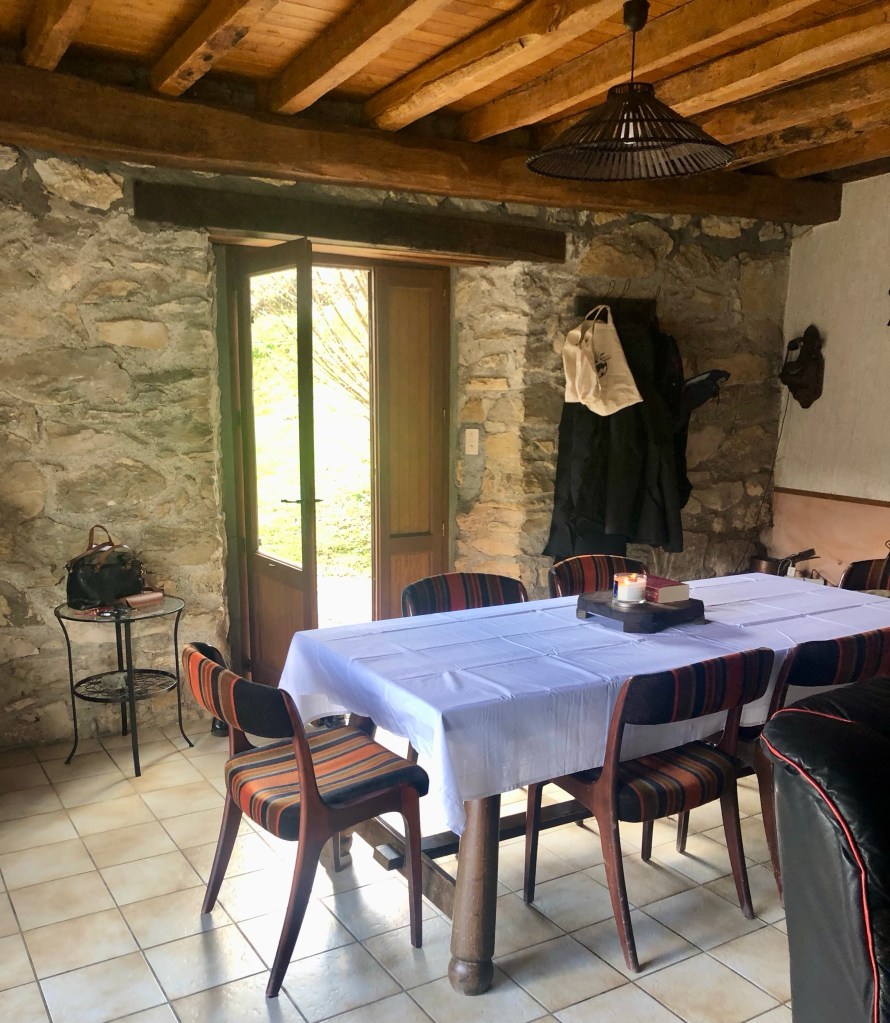
And believe it or not, underneath decades of dust the place isn’t all that bad. You might even call it beautiful. The oven is definitely circa the 1970s and an ugly mission brown but the colour of it hides the dirt we can’t scrub off, so, you know, out of sight, out of mind and all that. And it works really well. The stone walls of the gite are actually very charming and the fireplace is big, open and inviting.

Random things are inexplicably clean. All the windows are sparkling. Some of the rooms are lovely. Our bedroom is plain but clean and very comfortable. The bathroom could almost claim to be modern. It has a deep bath with water hot enough to make tea if you fancied doubling up on the washing of your person and a four-fruit herbal. Plus, there’s a view out of the bathroom window from the bathtub across the mountains. Mind you, every window and doorway here has a view across the mountains. You could say the local vista is showing off.

One of the piles of strange paraphernalia we found stacked up in a corner of the loungeroom turns out to be garden furniture, so we drag out two tables, a few chairs and a lie-low and give them a wipe. An outdoor umbrella is so crusted in grime we lather it up with dish soap and hide it out of sight behind the shed waiting for the next rain shower.

We take a run into the nearest large town about half an hour’s drive away and pick up a few essentials. Wine. A new toaster to replace the one riddled with mouse droppings. Wine. A new kettle to replace the one that wasn’t supplied to start with. Wine. New white pillowcases, white tablecloth and fresh tea towels. Wine. And cheese. Sorted.

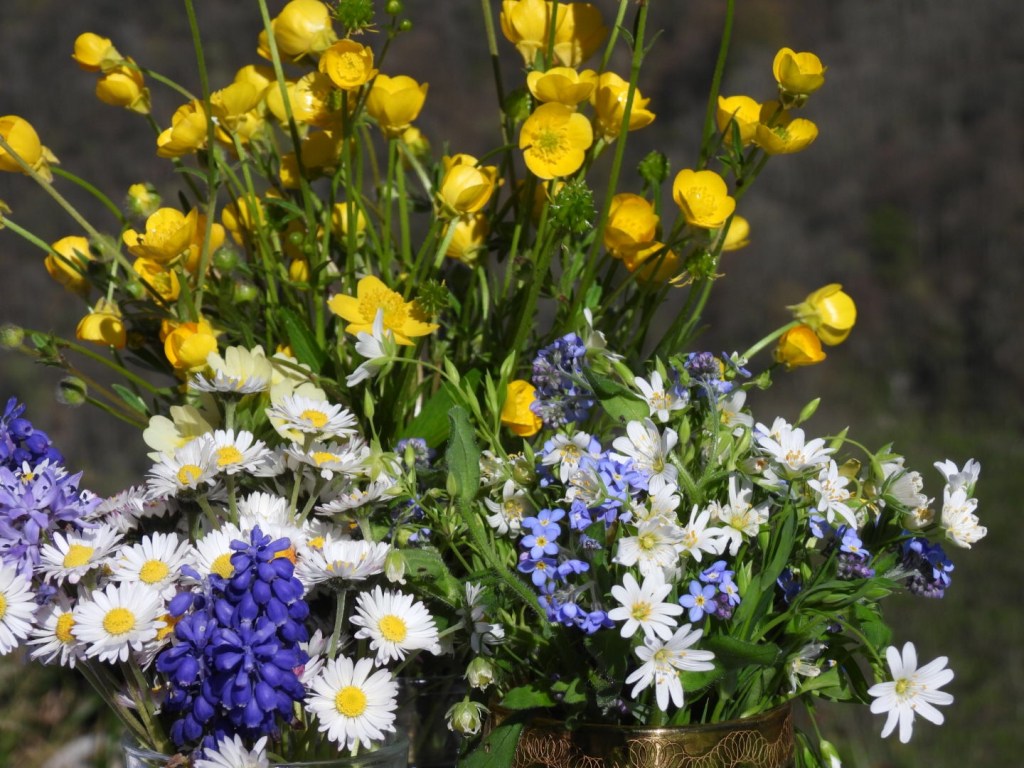
We stuff everything else we don’t like in the spare bedroom and shut the door. Arrange our new things in the house, Glynn chops wood and sets a fire for later while I spend a wonderful afternoon picking flowers in the garden. We have buttercups, daisies, grape hyacinths and something called ‘Siberian Bugloss’ which is a tiny, cornflower blue flower with a bright yellow centre. The flowers that grow wild here in paddocks and on roadsides are joy. I have stuffed old glasses and jugs full of them and laid them out over every surface and windowsill. The sills are gloriously deep here. You could easily sit in them. If I owned this place, and I’m increasingly wishing I did, I would make window seats everywhere.

The seeds of a new storyline have been sown, and I can feel the green shoots of them peeking through the surface of the soil, turning their faces to the sun. In this story, I’m not so much of a spoilt Australian grumbling because our holiday house deep in the Pyrenees in rural France wasn’t as clean as I’d have liked. In this story, I’m a cross between a farm wife and an older French version of Heidi, with maybe a touch of Julie Andrews in the opening scene of The Sound of Music where the music swells and she sweeps into sight, arms outstretched revelling in a spring mountain morning.

Not to say there’s still nothing to be concerned about. More for the locals obviously, than for us. I’ve started eyeing the neighbour’s cows, wondering how I’d go at milking them. Or making my own bread. Churning my own butter. Frolicking about the hillside. Increasingly, the cows seem uncomfortably aware of my scrutiny and are starting to look slightly alarmed. We have named them Bonnie and Clyde.

What I’m reading.

I’m reading Margaret Atwood, Old Babes in the Wood. This book is a joy. I’m halfway through and I’ve started slowing down to make it last longer. There is such a wild, sparkling range of stories here, from an Octopus-alien, tasked with entertaining imprisoned humans by retelling old fairy-tales, a young girl trying to work out if her mother is a witch and a wonderful conversation with Atwood and George Orwell, channelled through a medium. They’re interspersed with stories about a married couple in their later years, Tig and Nell, and these are beautiful. Margaret Atwood is 84 now, and her husband and life partner, Graham Gibson, to whom the book is dedicated, died as the book was being written. Death is threaded through these stories and it’s deeply sad and raw, but it frames grief as a lens through which to measure love. A kaleidoscope of ordinary moments both before and after loss, that together offer insight into what it means to love across a lifetime. It’s the most perfect collection I think I have ever read. I can never decide if I think Margaret Atwood or Helen Garner is the greatest writer ever born, and with this book, I am tipping slightly more toward Margaret. I know that will change the second I pick up Helen again, but I love the tussle.

What Glynn’s playing

Glynn’s in charge of the fire and our Pyrenees playlist so here’s a selection of what we’ve been listening to.

The Broken Circle Breakdown Bluegrass Band: Wayfaring Stranger

Francoise Hardy: Le Temps de L’Amour

Jacques Brel: Ne Me Quitte Pas

Yusef, Cat Stevens: Lady D’Arbanville

Serge Gainsbourg: Bonnie and Clyde

The Liminanas: Maria’s Theme

Dinah Washington: What a Difference a Day Makes

Simon and Garfunkel: April, Come She May

The good, the bad and the ugly

It’s been a bit of a week. We left the city and our beautiful bright apartment in the old centre of Montpellier, arrived in the Pyrenees ready for our rustic, rural retreat and things have not gone entirely smoothly.

We had lots of plans to farewell Montpellier. We loved it there so much. We envisioned something romantic, like champagne in the park or wandering soulfully around the Antique Quarter, or perhaps a glass of rose on the Place du Marches Aux Fleurs. We end up carousing instead, late into the night with four new French friends we met by accident after stopping for a quick one at a local bar a thirty-second walk from our flat. They were generous with their company and their wine. And they loved Jimmy Barnes so were delighted to meet Australians and bond over pub rock. We staggered home around two in the morning after doing shots and singing Working Class Man and other classic Cold Chisel hits loud enough to rattle the shutters all up the Rue L’ecole. So our last day in Montpellier was not spent wafting wistfully around favourite haunts. It was spent lying in bed, holding our heads, emerging gingerly in the late afternoon to stuff four months of accumulated belongings into two suitcases and clean.

Still, when we left we were looking ahead, not behind. We had eight weeks booked in the Pyrenees, in a rustic gite perched on the side of a mountain near Sarrance, about an hour’s drive from the Spanish border. No plans except walking, reading and watching the day go by on the terrace. After four months of work and travel, we are both happily exhausted and ready for a big shift in lifestyle. This is why we came away, it’s all been leading to this. When we left Fremantle, we were heavy with grief after the death of our beloved labrador, Huey, burnt out, and excited to travel, explore and have a proper break at the end of it. Glynn’s work has been fantastically successful, we have been to Scotland, Norway, Germany and France and had an incredible time. But now we needed to switch off, rest and let the views and the mountain air soothe our ragged souls before we leave for home and get back into the usual routines of life.

We arrived in the Pyrenees slightly bug-eyed with tension from the six-hour drive there. Glynn is yet to get completely comfortable with driving on the wrong side of the road and I am yet to get completely comfortable with watching him learn. Especially when it involves skidding precariously around vast drops on mountain passes so narrow and steep even the goats look nervous. Or squeezing through tiny roads that wouldn’t pass as laneways at home, trying to avoid cars, trucks, and the occasional tractor careening gaily around with the easy insouciance of those who grew up in these parts. All right for some. I left some of my heart in Montpellier and the rest of it was now in my throat. Full marks to the bloke for taking on the driving. If I were behind the wheel, I’d still be curled up in a ball by the side of a lonely French road in the middle of nowhere, crying for my mother.

It was still a beautiful drive, we stopped along the way to stock up on wine and cheese at the biggest supermarket I’ve ever been lost in and we were feeling pretty set to chuck our bags in a corner in our new home, crack open a red and settle in just in time for sunset over the peaks. The bloke, who has been clinging on to sanity by what’s left of his fingernails for some time now is beside himself with anticipation of a glorious and restful mountain retreat. He instructs me to video our entrance into the property so we can record this glorious moment as a highlight to look back upon fondly in our old age. To remind us of simple times, when life was easy, the days were gentle and the air was pure and fresh and as clean as only mountain air can be.

And so it was. Outside. Inside, things were a little more rustic than we planned. We opened the door and were thrown back several paces from the force of the thick cloud of dust that billowed out. We clasped our shirts to our mouths and noses in a vague effort at self-preservation, coughed and peered tentatively inside to be knocked sideways again by wave after wave of a deep and vicious must that screamed from within like a host of trapped banshees, released at last. This place had clearly been shut up since last summer, if not longer.

I opened a cupboard and was showered in a rain of mouse droppings, also alarmingly evident in the ancient toaster. No sign of anything like it in the kettle, because there was no kettle. The ancient oven was coated in thick grime. Every surface was jammed with a motley array of cheap knick-knacks, covered in thick layers of dust and the odd dead spider. We clutched each other in horror and started composing our message to the owner demanding our money back and wondering how we are going to scratch together the energy to find a hotel for the night in the middle of nowhere, let alone somewhere else to stay for two months.

We washed two glasses and dried them on our t-shirts to be safe, poured ourselves two large glasses of wine and escaped to the safety of the terrace.

And we step into the most glorious view. Breathtaking. We see snow-capped peaks crowding the skyline all around us. We are in the heart of the Pyrenees. We hear the river flowing below and the trees that line the lower reaches of the ranges are all colours; dusky purples, palest greens and soft browns. Granite rocks and the winter skeletons of the deciduous trees that line our long driveway are smothered in lichens and mosses. Bright yellow buttercups and riots of small white daisies speckle the grasses outside. Early songbirds are calling and the sound of windchimes turns out to be two belled cows that wander the pastures of the farm below us. Our tired hearts lift.

We decide to sleep on it and see how things look in the morning.

What I’m reading

I’m reading Jenny Colgan, Sunrise by the Sea. This is peak Colgan. It’s about a young woman, Marissa Rossi, who is struggling with grief that won’t heal after her grandfather dies. She moves to a remote island off the coast of Cornwall to recuperate, and meets Polly, who lives in a lighthouse, runs a bakery and has been adopted by an injured puffin called Neil. Marissa’s next-door neighbour is a piano teacher and a huge bear of a Russian who is also running from grief, in the form of a ballet dancer who rejected him in favour of someone more exciting. They bond over Italian food and music. It’s light, charming and easy. A perfect book if you’re looking for something gentle and engaging without being in any way challenging. I love you Jenny.